-
Legal Basement vs Basement Development
 What Homeowners Should Know
When planning a basement renovation, homeowners often hear the terms legal basement and basement development used interchangeably. While they may sound similar, they are not the same. Understanding the difference between a legal basement vs basement development is important, especially when permits, safety requirements, and long-term property value are involved.
This article explains the key differences so homeowners can make informed decisions before starting a basement project.
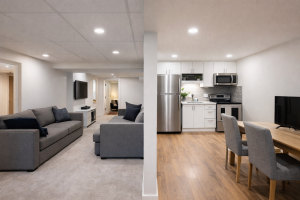
A basement development refers to finishing or renovating a basement space for personal use by the main household. This can include adding bedrooms, a bathroom, a living area, storage space, or a home office. A basement development does not automatically qualify as a separate dwelling and is not approved for independent living.
In most cases, a basement development does not include a full kitchen or a separate entrance intended for another household. Permits may still be required depending on the scope of work, particularly when changes are made to framing, electrical, plumbing, or insulation. The focus of approval is usually on construction safety rather than independent occupancy.
A legal basement, often called a legal basement suite, is designed to function as a separate living unit within a home. It must meet specific building, zoning, and life-safety requirements set by the City. A legal basement includes a kitchen, bathroom, sleeping area, and living space, along with proper fire separation from the main dwelling.
Legal basements must also meet strict requirements for ceiling height, ventilation, sound separation, and safe exits. These standards are in place to ensure the space can be safely occupied by a separate household. Because of these requirements, legal basements go through a more detailed permit and inspection process.
The main difference between a legal basement vs basement development comes down to use and approval. A basement development is intended for the primary household, while a legal basement is approved for independent living and is often used as a rental unit. A basement development cannot legally be rented as a separate unit, even if it looks similar to one.
Permits are another key difference. A basement development may only require a building permit depending on the work involved. A legal basement usually requires a development permit, a building permit, and multiple trade permits. Inspections for a legal basement are more detailed and focus heavily on fire safety and occupant protection.
Cost and timeline are also affected. A basement development is generally less expensive and faster to complete because it does not require the same level of separation or safety upgrades. A legal basement often costs more due to additional construction requirements such as fire-rated assemblies, upgraded mechanical systems, and properly sized egress windows. Permit review and inspections can also extend the overall timeline.
Choosing between a legal basement vs basement development depends on your goals. If the space is intended for family use or extra living area, a basement development may be sufficient. If the goal is to create a rental unit or an independent living space, a legal basement is the correct and compliant option.
Understanding the difference early helps homeowners avoid costly changes later and ensures the project aligns with City regulations.
Basement renovations can add value and functionality to a home, but not all basement projects are the same. Knowing the difference between a legal basement vs basement development helps homeowners set realistic expectations, follow proper approval processes, and protect their investment before construction begins.